The blowout at the Goumeri W-8 well in the Agadem oil basin has become a defining moment for Niger. What began as a technical failure on 25 September 2026 has triggered a national debate over environmental safety, the true cost of the country’s oil partnership with China, and the mounting friction between Niamey and Beijing. The coming weeks will determine whether this crisis becomes a turning point toward accountability or another missed opportunity.
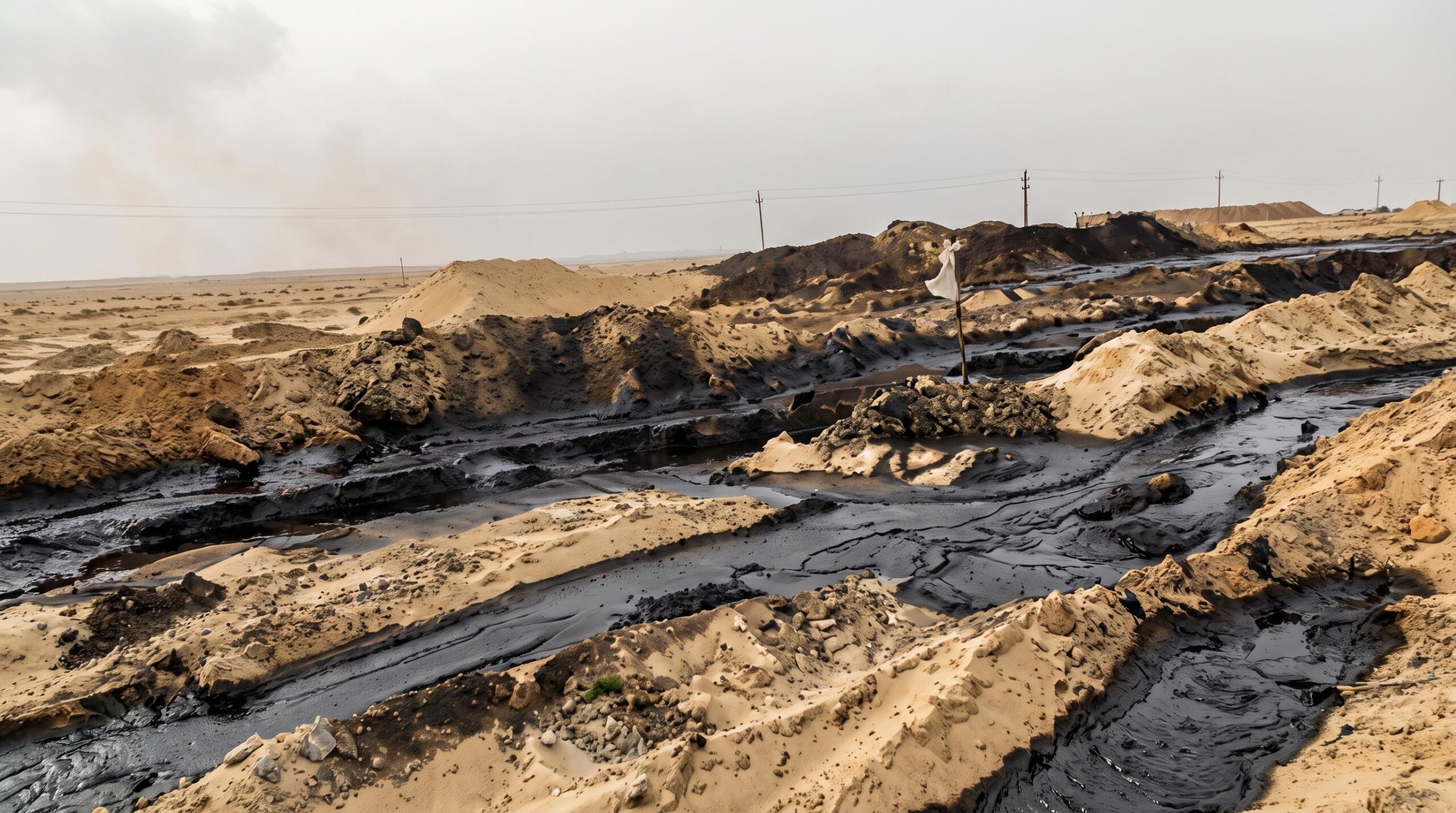
Niger’s military authorities have long sold oil extraction as the cornerstone of economic sovereignty. That narrative is now under strain. The eruption sent crude oil and gas shooting several meters into the air, with hydrocarbon flows reported across the site. Two workers were injured and received medical care, while no fatalities were officially confirmed in initial statements. Yet the real danger extends far beyond the visible damage on the platform.
A fragile ecosystem under threat
In this Sahelian region, where water access is a matter of survival for communities, pastoral activities, and ecosystems, uncontrolled hydrocarbon dispersion could leave lasting scars. Crude oil contains substances capable of contaminating soil, disrupting vegetation, and harming wildlife. If it seeps into the ground, certain components can degrade groundwater quality—water that countless rural populations depend on daily.
Add to that the risks of gas emissions, fire hazards, and potential exposure of workers and residents to toxic substances. In an area already grappling with climate change and pressure on natural resources, a poorly contained oil spill could deepen existing vulnerabilities. The consequences would not be purely ecological—they could also threaten the livelihoods of local communities.
Emergency response leaves critical questions unanswered
Authorities have announced operations to contain the flows and bring the eruption under control. Technical teams were mobilized, and containment measures were reportedly deployed to limit the spread of oil. The condition of the installations and the risks to neighboring wells are also raising concerns.
These emergency measures are necessary, but they do not erase the anxiety. Communities need to know whether their water resources are at risk, which areas to avoid, and what guarantees exist to prevent the situation from worsening.
The government must go beyond official statements. It needs to publish inspection results, provide regular updates on the incident, and allow an independent assessment of any damage. Without accessible and verifiable data, assurances from authorities risk ringing hollow.
Accountability matters just as much. The investigation must determine the technical causes of the eruption, verify compliance with safety standards, and establish whether failures in maintenance, monitoring, or prevention contributed to the incident. The pursuit of responsibility must not be sacrificed to economic urgency or obstructed by political considerations.
The Chinese partnership faces its toughest test
At the heart of this crisis lies the oil partnership between Niger and China, which has become a pillar of Niamey’s economic strategy. The China National Petroleum Corporation (CNPC), a state-owned Chinese company, plays a central role in exploiting the Agadem basin and developing the infrastructure that brings Nigerien crude to international markets.
This cooperation, presented as a development opportunity, nonetheless raises questions about profit sharing, the transparency of contractual commitments, and state control over oil activities. The April 2024 agreement, involving $400 million in financing tied to oil commercialization, illustrates the financial stakes. Yet the detailed terms of certain commitments remain largely inaccessible to the public.
This opacity is especially troubling given that oil extraction directly shapes the country’s economic and environmental future. Nigeriens have every right to know what revenue their state derives from this activity, what environmental obligations bind the operators, and what financial guarantees exist in case of an accident.
Corporate environmental responsibility cannot be separated from economic responsibility. If shortcomings are established, the operator must answer for its obligations under contractual provisions and applicable law. The state, for its part, must ensure that control, prevention, and compensation mechanisms are actually enforced.
Niamey and Beijing: friction that weakens oil ambitions
The Agadem incident unfolds against a backdrop of sometimes strained relations between Nigerien authorities and their Chinese partners. Since the July 2023 coup, the military government has vowed to take greater control over national resources and rebalance economic ties with foreign partners.
But this push for sovereignty collides with a hard reality: Niger remains heavily dependent on its partners’ expertise, capital, and infrastructure to extract and sell its oil. Disagreements over economic interests and cooperation terms have exposed the limits of a strategy that seeks to assert independence without always having the technical and financial means to break free from its partners.
In March 2025, the expulsion of three Chinese officials linked to the oil sector had already laid bare the tensions between Niamey and Beijing. That episode highlighted the fragility of a relationship that remains essential to Niger’s economic ambitions.
The Goumeri W-8 crisis now raises another question: could political and commercial tensions divert attention from industrial safety and environmental protection? The answer cannot be assumed. The circumstances of the accident and the decisions taken by each party will need scrutiny. But one thing is certain: protecting communities must never become a bargaining chip in diplomatic negotiations.
The junta’s moment of reckoning
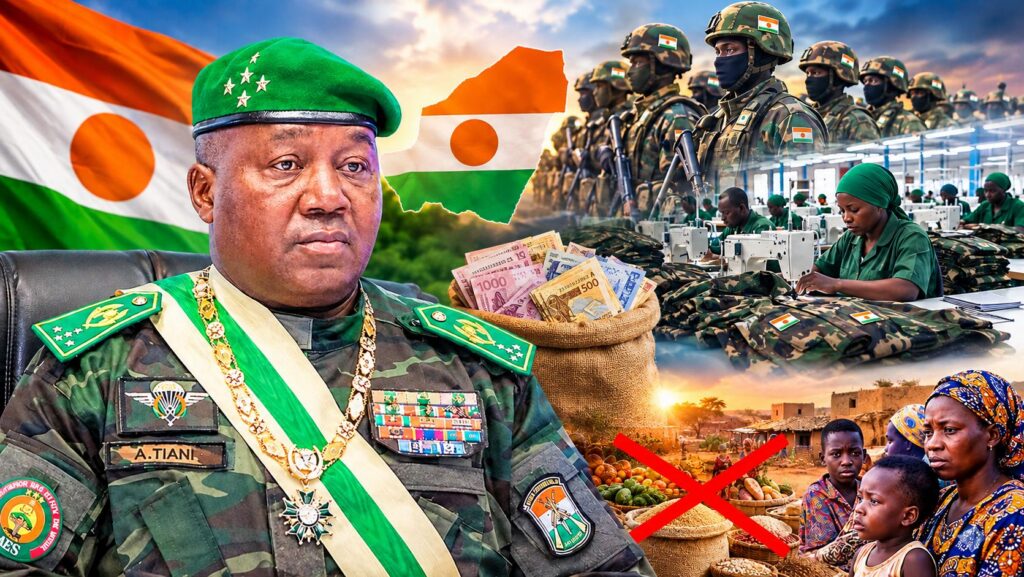
For Niger’s military leadership, this incident is a major test. By making economic sovereignty a cornerstone of its political message, the junta committed to defending the country’s interests. But that ambition cannot be limited to challenging terms imposed by foreign partners or demanding a larger share of oil revenue.
Sovereignty also means having institutions capable of enforcing safety standards, overseeing operators, and protecting natural resources. It requires that contracts face rigorous scrutiny and that citizens can access information about how their national patrimony is exploited.
Several steps are now unavoidable: publish the findings of the eruption investigation, conduct independent soil and water analyses, report on containment measures, and establish a transparent compensation mechanism if harm is confirmed. Riverside communities must also be informed of risks and involved in monitoring the situation.
The state must ultimately ensure that any liabilities are established without favoritism—whether they involve the operating company, technical contractors, or public oversight mechanisms.
Black gold must not become a poison for Niger
The crude oil leak at Agadem is a reminder that underground wealth can become a source of vulnerability when extraction is not matched by sufficient environmental safeguards. For a country facing multiple economic and social challenges, the fallout from lasting pollution could weigh heavily on populations that do not necessarily benefit fairly from oil revenues.
The stakes go beyond containing an industrial accident. They touch on Niger’s ability to reconcile resource extraction, environmental protection, and political accountability.
The junta must now prove that its sovereignty ambitions translate into concrete action: transparent contracts, effective operator oversight, accident prevention, and compensation for any harm. China, for its part, must be held to the obligations that bind its activities in Niger.
In Agadem, oil was meant to symbolize the promise of a better economic future. It must not become the source of an avoidable ecological disaster. True sovereignty is not just about profiting from national wealth—it is also about protecting the land, the water, and the people who depend on them.